How to Plan What to Do at a National Park (Without the Spreadsheet)
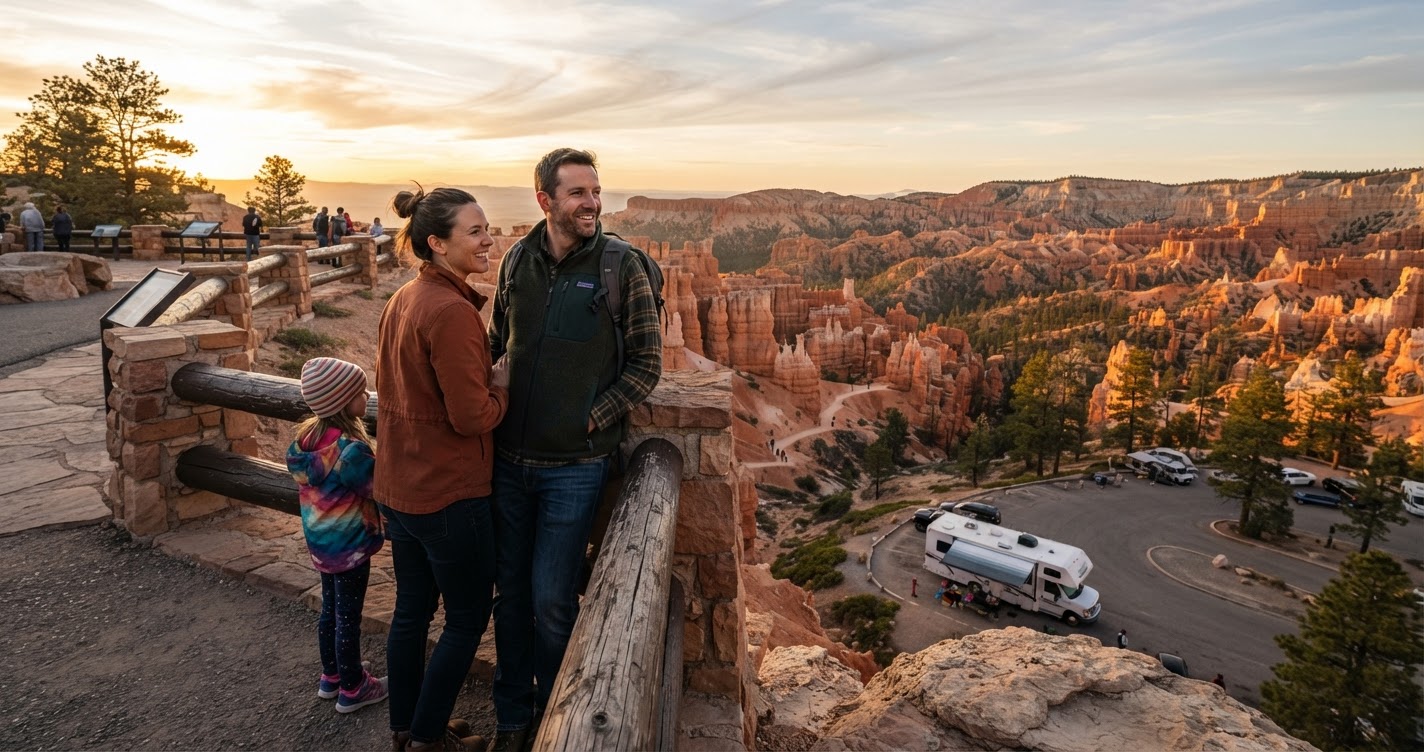
You nailed the hard part. The campground is booked, the route is mapped, and the rig is packed. Then you pull into the park and realize you have three days, dozens of trails, a handful of scenic drives, at least one must-see hike — and no plan for any of it.
Sound familiar? Most RV travelers spend hours researching getting to the park and almost no time planning what to do once they arrive. The result is a lot of aimless driving around the park, missed trailheads, and that sinking feeling on the last morning when you realize you skipped the one thing everyone said you had to see.
It does not have to be that way.
Why Planning Your Days Inside the Park Matters
National parks are big. Zion alone has over 200 square miles of canyon country, and even "small" parks like Acadia spread across 49,000 acres of coastline, mountains, and forest. Without a plan, you end up:
- Criss-crossing the park — driving past the same overlook three times because the trailheads are scattered and you did not group them by area.
- Missing the best windows — popular trails and scenic drives have ideal times of day (and some have timed-entry permits). Show up at the wrong hour and you are either fighting crowds or watching the sun disappear behind the ridge.
- Wasting arrival and departure days — check-in is at noon, checkout is at 11 AM, and you drove four hours to get there. A full-day hike is not happening on either end — but a short evening walk and a sunrise overlook absolutely are.
- Getting surprised by closures — trails close for rockfall, roads close for construction, and entire areas close for wildlife management. If your "plan" is a list of things you saw on Instagram, you will not know until you are standing at the trailhead reading the closure sign.
The fix is not a spreadsheet. It is a plan that accounts for where you are camped, how much time you actually have each day, what is open, and what is worth doing — in an order that does not have you driving in circles.
The Old Way: Tabs, PDFs, and Guesswork
Here is how most people plan their park days today:
- Google "[park name] best hikes" and open 14 browser tabs.
- Cross-reference with the NPS website for current conditions, but good luck finding the specific closure that affects your trail on your dates.
- Build a spreadsheet or handwritten list grouping activities by day, estimating drive times between trailheads, and guessing how long each hike takes.
- Realize on day one that your carefully planned morning was blown because you did not account for the 45-minute shuttle ride to the trailhead, or that the trail you wanted requires a permit you did not get.
It works — barely — if you are willing to put in the hours. But for RV travelers juggling rig logistics, campground check-in windows, driving fatigue, and travel partners with different energy levels, it is a lot of unpaid labor for a vacation.
What a Park Day Plan Should Actually Look Like
A good in-park plan should:
- Start from your campsite — not from a generic "visitor center" starting point, but from the actual campground where your rig is parked, with real drive times to each trailhead and attraction.
- Respect your real schedule — arrival day is short because you drove in. Checkout morning is short because you have to break camp. The days in between are full. Each one should be planned differently.
- Put the must-sees first — if there is one hike you cannot miss, it should be on your strongest day with the most daylight, not squeezed into checkout morning.
- Group stops geographically — hikes, overlooks, and walks in the same area of the park should be on the same day, in a loop, so you are not backtracking.
- Account for conditions — trail closures, road closures, weather forecasts, and seasonal restrictions should shape the plan, not surprise you at the trailhead.
- Know your rig — some park roads have vehicle length limits, low clearances, or tight switchbacks. A plan that sends your 38-foot Class A down a road meant for sedans is not a plan.
How VistaBound Plans Your Park Days Automatically
This is exactly what VistaBound's new While You're Here feature does. For every stay in or beside a national park, state park, national forest, or Canadian provincial park, VistaBound builds an hour-by-hour daily plan — automatically.
Here is how it works, using a real example: three nights at Watchman Campground in Zion National Park.
It Starts From Your Campsite
The plan is anchored to Watchman Campground — not a generic park entry point. Drive times, walking distances, and directions all originate from where your rig is actually parked. If you move to a different campground, the plan adjusts.
Arrival Day Stays Short
You rolled in at noon after a long drive. VistaBound knows that. Your arrival day plan is light: check in, set up the rig, and take an easy riverside walk at Pa'rus Trail — a paved, flat, 3.5-mile path with sunset canyon views. No one is asking you to tackle Angels Landing after five hours on the road.
Full Days Get the Big Stuff
Day two is where the real exploring happens. The plan stacks stops in a logical loop — upstream to the Temple of Sinawava, then back down-canyon, hitting Riverside Walk, The Narrows, Zion Lodge for lunch, Weeping Rock, and Grotto Trail in order. No backtracking across the park.
Each stop includes:
- Start time based on what came before it
- Effort level (easy, moderate, strenuous)
- Distance and estimated duration
- Drive time from the previous stop
- Specific notes — "shuttle required to Temple of Sinawava; RV cannot go up-canyon" or "check flash-flood forecast before wading The Narrows"
Current Conditions Shape the Plan
The Zion example includes live park alerts right at the top: Watchman Trail is closed, there are large vehicle restrictions on the Zion-Mt. Carmel Highway, and a cyanobacteria advisory is in effect for the river. These are official National Park Service alerts pulled in real time — not something you have to go hunt down on nps.gov.
If a trail or road closes between when you planned the trip and when you arrive, Trip Watch emails you and the plan updates around the closure automatically.
The Weather Is Baked In
The plan factors in the week's forecast for your stay. If rain is expected on Wednesday, it is not going to schedule your biggest exposed-ridge hike for that day. It will put the sheltered canyon walk there instead and move the ridge hike to the clear day.
Your Rig Is Accounted For
VistaBound knows where your RV can and cannot go. That narrow scenic drive with the 25-foot vehicle limit? It will not appear on your plan if you are driving a 38-footer. Shuttle-only roads are flagged clearly so you know to leave the rig at camp.
You Can Change Everything
The plan is a starting point, not a prison sentence. Tell the Trip Co-Pilot "less walking" and it rebuilds around shorter, easier stops. Say "sleep in on Sunday" and it shifts the morning activities. Want to add a restaurant someone recommended? Drop it in and the day reshuffles.
Take It With You
Export any day as a PDF, or pull up the full plan offline in the VistaBound iPhone or Android app — right in Today's Highlights. No cell service at the campground? No problem. The plan is already on your phone.
It Works Beyond National Parks
While You're Here is not limited to the big-name national parks. It builds plans for:
- State parks — from Texas state parks to New York's Adirondack preserves
- National forests — USFS lands with campgrounds and trail networks
- Canadian provincial parks — for US RVers venturing north of the border
Any time your trip includes a stay in or beside one of these, VistaBound plans the days for you.
Free to Try
Free accounts can build three park plans per day on the web — enough to try it on your next trip and see if it changes how you experience a park. Paid plans make it unlimited and put the plans in the mobile apps for offline access on the road.
The Bottom Line
Every other trip planner stops at "here is your campground." VistaBound is the first to answer the question that comes next: what do I actually do when I get there?
If you have ever pulled into a national park with a booked campsite and a blank itinerary, While You're Here is built for you. It takes the same research-and-spreadsheet process that used to eat an evening of your vacation and does it in seconds — anchored to your campsite, sized to your real days, checked against what is open, and aware of where your rig can go.
Plan your next park stay at vista-bound.com — free to start, no card required.