How to Plan the Perfect 2-Week RV Trip Through the Southwest
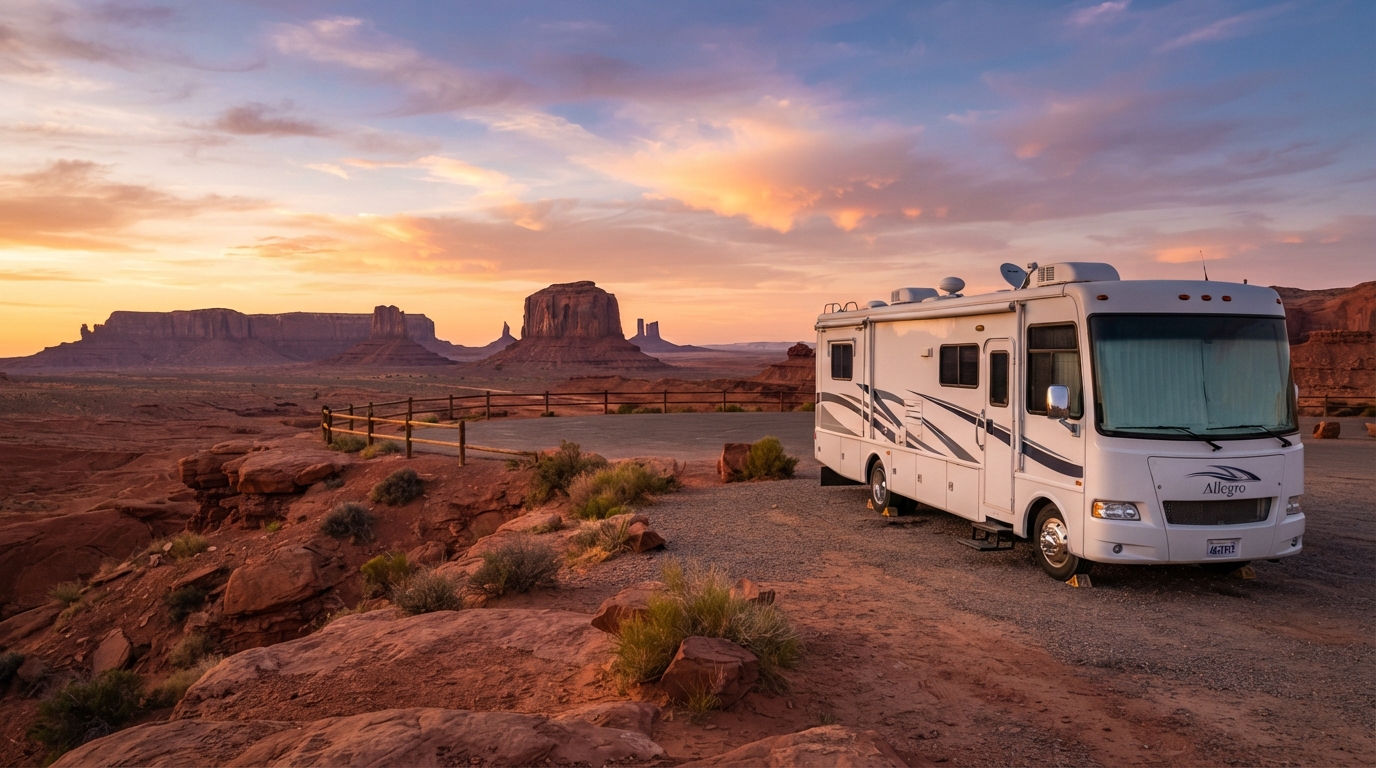
The American Southwest is RV travel royalty. Red rock canyons, slot canyons carved by ancient rivers, night skies so dark you can see the Milky Way with your naked eye, and some of the most iconic national parks in the country — all connected by wide-open highways built for exactly this kind of road trip.
But planning a Southwest RV trip isn't as simple as pointing your rig toward Arizona and hoping for the best. Campground availability is tight (especially March through October), some park roads have height and length restrictions that'll turn your dream route into a white-knuckle detour, and the distances between stops can be deceptively long when you're hauling a 30-foot trailer through mountain passes.
This guide walks through how to plan a realistic, campground-secured, RV-safe 2-week loop through the Southwest's greatest hits: Grand Canyon, Zion, Bryce Canyon, Monument Valley, Sedona, and more. We'll cover route planning, where to camp (and how to actually book a site), what to see, and how to avoid the mistakes that turn a bucket-list trip into a logistical headache.
Why the Southwest Is Perfect for RV Travel (and Also Challenging)
The Southwest — Arizona, Utah, southern Nevada, and parts of New Mexico and Colorado — has everything RVers dream about:
- Iconic national parks clustered together: You can hit Zion, Bryce Canyon, and Grand Canyon North Rim in a single week without burning out on drive time.
- RV infrastructure that actually exists: Most Southwest parks and gateway towns were built with RVers in mind. You'll find campgrounds with hookups, dump stations, and wide pull-through sites.
- Shoulder seasons that work: March-May and September-October offer warm days, cool nights, smaller crowds, and (slightly) better campground availability than summer.
- Scenery that doesn't quit: Every mile between parks delivers postcard views. The drive is the destination.
But the Southwest also presents real challenges:
- Campground availability is brutal. Recreation.gov sites at Zion, Bryce, and Grand Canyon can book out 6 months in advance during peak season.
- RV restrictions are common. Some park roads have length limits (looking at you, Zion Scenic Drive). Others have low tunnels, steep grades, or tight switchbacks.
- Weather extremes. Summer temps in low-desert areas (Phoenix, Las Vegas, Moab in July) can hit 110°F. High-elevation parks can see snow as late as May.
- Long distances between services. Fuel, water, and dump stations can be 100+ miles apart on remote stretches.
The key to a great Southwest RV trip is planning ahead, locking in campsites early, and building a route that actually fits your rig.
The Classic 2-Week Southwest RV Loop
Here's a proven 14-day itinerary that balances iconic stops, realistic drive times, and campground availability. This loop assumes you're starting and ending in Las Vegas (easy airport access, RV rental hub) and traveling in a mid-size Class C or travel trailer (28-32 feet).
Day 1-2: Las Vegas to Zion National Park (160 miles, ~2.5 hours)
Camp: Watchman Campground (Zion) or private campgrounds in Springdale if Watchman is full.
Start easy. Las Vegas to Zion is a short, scenic drive on I-15 North through the Virgin River Gorge — one of the most dramatic interstate stretches in the country.
What to do:
- Day 1 afternoon: Set up camp, walk the Pa'rus Trail (paved, flat, RV-friendly).
- Day 2: Shuttle into Zion Canyon. Hike Angels Landing (permit required) or The Narrows (wading through the Virgin River).
RV note: You cannot drive your RV into Zion Canyon March-November. Park at the visitor center and take the free shuttle. Watchman Campground is walking distance from the shuttle stop.
Day 3: Zion to Bryce Canyon National Park (85 miles, ~2 hours)
Camp: North Campground or Sunset Campground (Bryce Canyon).
Short drive on UT-9 East (incredible views, but check RV restrictions — the Zion-Mt. Carmel Tunnel requires an escort for rigs over 11'4" tall or 7'10" wide) and US-89 North.
What to do:
- Afternoon arrival: Drive the 18-mile Bryce Canyon Scenic Drive and stop at overlooks (Sunrise Point, Sunset Point, Inspiration Point).
- Evening: Catch sunset at Bryce Point — the hoodoos glow orange and red.
Bryce campground tip: Both campgrounds have sites that fit 30-foot rigs, but reservations fill fast. First-come sites exist, but don't count on them April-October.
Day 4: Bryce Canyon
Camp: Stay at Bryce.
What to do:
- Morning: Hike the Navajo Loop or Queen's Garden Trail (descend into the hoodoos).
- Afternoon: Explore the less-crowded southern section of the park (Rainbow Point, Yovimpa Point).
Bryce sits at 8,000 feet elevation — nights can be cold even in summer. Bring layers.
Day 5-6: Bryce to Monument Valley (250 miles, ~4.5 hours)
Camp: Goulding's Campground (full hookups, views of the valley) or The View Campground (Navajo Tribal Park, dry camping with the best sunrise views in the Southwest).
This is your longest single drive, but the route (US-89 South through Kanab, then US-160 East) is stunning. You'll pass through Navajo Nation and see the valley's iconic buttes rising from the desert floor 20 miles out.
What to do:
- Day 5 evening: Arrive, set up, and catch sunset from the campground.
- Day 6 morning: Take a guided Navajo tour into the valley (required — private vehicles can only drive the 17-mile scenic loop road, and it's rough/dusty/not ideal for towed rigs).
- Day 6 afternoon: Drive to your next stop or explore the valley visitor center.
Monument Valley RV note: The View Campground has no hookups, but the sunrise views from your site make it worth it. Goulding's has full hookups and is more RV-friendly.
Day 7-8: Monument Valley to Grand Canyon North Rim (180 miles, ~3.5 hours)
Camp: North Rim Campground (book months ahead) or nearby Kaibab Camper Village (Jacob Lake, full hookups).
The North Rim is higher, cooler, less crowded, and more remote than the South Rim. It's only open mid-May to mid-October (snow closes the road in winter).
What to do:
- Day 7 afternoon: Arrive and drive to Bright Angel Point for your first canyon view.
- Day 8: Hike the North Kaibab Trail (just the first 2-4 miles for canyon views) or drive to Cape Royal and Point Imperial for sweeping overlooks.
North Rim campground tip: First-come sites fill by 10 a.m. in summer. Reservations are gold. If the North Rim is full, Kaibab Camper Village is 45 minutes north and has full hookups.
Day 9-10: Grand Canyon North Rim to South Rim (210 miles, ~4.5 hours)
Camp: Trailer Village (South Rim, full hookups) or Mather Campground (South Rim, some sites fit 30-foot rigs).
Yes, the rims are only 10 miles apart as the crow flies, but it's a 210-mile, 4.5-hour drive around the canyon. Plan accordingly.
What to do:
- Day 9 afternoon: Arrive, set up, walk the Rim Trail from Mather Point to Yavapai Point.
- Day 10: Sunrise at Mather Point, then shuttle along Hermit Road to catch overlooks (Hopi Point, Mojave Point, The Abyss). If you're ambitious, hike partway down the Bright Angel Trail.
South Rim RV note: The South Rim is crowded. Trailer Village is the only campground with full hookups and pull-through sites. Book 6+ months ahead.
Day 11: South Rim to Sedona (110 miles, ~2.5 hours)
Camp: Rancho Sedona RV Park (creekside, full hookups, walking distance to Uptown Sedona) or Distant Drums RV Resort (quiet, pet-friendly).
Sedona is red rock paradise. Smaller scale than the national parks, but jaw-dropping scenery and great hiking.
What to do:
- Afternoon arrival: Drive the Red Rock Scenic Byway (AZ-179) through the Village of Oak Creek.
- Evening: Sunset at Airport Mesa or Cathedral Rock.
Day 12: Sedona
Camp: Stay in Sedona.
What to do:
- Morning: Hike Devil's Bridge (most Instagrammed spot in Sedona) or Cathedral Rock.
- Afternoon: Drive through Oak Creek Canyon on AZ-89A (one of Arizona's most scenic roads).
- Evening: Explore Uptown Sedona shops and galleries.
Sedona RV tip: Most Sedona campgrounds are in the Village of Oak Creek (6 miles south) rather than in town. Plan for short drives to trailheads.
Day 13: Sedona to Las Vegas (280 miles, ~4.5 hours)
Camp: Las Vegas RV Resort or Oasis Las Vegas RV Resort (if you want to stay the night) or return your RV rental and fly out.
This is a long drive back through Prescott, Kingman, and the I-40/I-15 corridor. Break it up with lunch in Flagstaff or a stop at Montezuma Castle National Monument (quick detour, impressive cliff dwellings).
Day 14: Buffer/Flex Day
Use this as a rest day, a travel buffer, or add a bonus stop like Antelope Canyon (requires a guided tour, close to Page, AZ) or Horseshoe Bend.
Where to Camp: Navigating Southwest Campground Availability
Campground availability is the #1 trip-killer for Southwest RV trips. Here's how to actually secure sites:
Book Recreation.gov campgrounds 6 months out
Zion (Watchman), Bryce (North/Sunset), Grand Canyon South Rim (Mather/Trailer Village), and Grand Canyon North Rim all use Recreation.gov. Reservations open exactly 6 months before arrival at 10 a.m. MT. Popular dates sell out in minutes.
Strategy: Set a calendar reminder, log in at 9:55 a.m., and be ready to click at 10 a.m. sharp. Have backup dates ready.
Use private campgrounds as Plan B
Every major park has private RV parks nearby with full hookups, pull-throughs, and same-week availability:
- Zion: Zion River Resort, Zion Canyon Campground (Springdale)
- Bryce: Ruby's Inn RV Park & Campground
- Monument Valley: Goulding's Campground
- Grand Canyon North Rim: Kaibab Camper Village (Jacob Lake)
- Grand Canyon South Rim: Grand Canyon Camper Village (Tusayan)
- Sedona: Rancho Sedona RV Park, Distant Drums RV Resort
Private campgrounds cost more ($50-80/night vs. $20-35 for national park sites) but offer better amenities and availability.
Watch for cancellations with Campsite Radar
Recreation.gov sites open up constantly as travelers cancel. VistaBound's Campsite Radar monitors sold-out campgrounds 24/7 and sends you an instant alert when a site opens up. It's how RVers score last-minute Zion and Grand Canyon reservations without refreshing the page 40 times a day.
Know your rig's campsite fit
Not all campsites fit all rigs. Check:
- Maximum RV length (some sites max out at 27 feet, others fit 40+ foot Class As)
- Pull-through vs. back-in (pull-throughs are easier for trailers and large motorhomes)
- Hookups (electric/water/sewer vs. dry camping)
VistaBound's Match Score automatically filters campgrounds by your rig's length, width, and hookup needs, so you're not booking a site you can't physically fit into.
Route Planning: RV-Safe Navigation Through the Southwest
Not all roads are RV-friendly. Here's what to watch for:
Height and length restrictions
- Zion-Mt. Carmel Tunnel: Max height 11'4", width 7'10" without a ranger escort (costs $15, arranged at the tunnel entrance). Rigs over 13'1" tall or 40' long cannot pass at all.
- Bryce Canyon: Most park roads are RV-friendly, but some parking areas have length limits.
- Monument Valley loop road: Rough, unpaved, dusty. Not ideal for towing. Unhitch or take a guided tour.
Steep grades and switchbacks
- Oak Creek Canyon (AZ-89A): Gorgeous but steep/curvy. Manageable for most rigs, but go slow and use lower gears.
- Roads to viewpoints: Some canyon overlooks (e.g., Toroweap in Grand Canyon) require high-clearance 4x4 and are completely off-limits for RVs.
Use RV-safe GPS
Standard Google Maps doesn't account for low bridges, weight limits, or propane restrictions. Use an RV-specific GPS or app that routes you around hazards.
VistaBound includes RV-safe navigation with CarPlay and Android Auto, so your route avoids low clearances and keeps you on RV-friendly roads from your dashboard screen.
What to Pack for a Southwest RV Trip
Beyond the usual RV essentials, the Southwest has some specific needs:
- Extra water: Dry camping is common. Carry extra fresh water if you're staying at parks without hookups.
- Sun protection: High elevation + intense sun = sunburn in 20 minutes. Pack sunscreen, hats, and UV-blocking clothes.
- Layers: Temps swing 40°F between day and night. Bring warm layers even in summer.
- Hiking boots: Most Southwest highlights require at least a short hike.
- Reservation confirmations (printed): Cell service is spotty. Print your campground confirmations.
Best Time to Visit the Southwest in an RV
- Spring (March-May): Warm days, cool nights, wildflowers in bloom. Crowds build toward Memorial Day. North Rim roads may still be closed early in the season.
- Fall (September-October): Ideal weather, thinner crowds after Labor Day, aspens turning gold at higher elevations. North Rim closes mid-October.
- Summer (June-August): Peak crowds, extreme heat in low desert areas (Phoenix, Las Vegas, Moab). Higher elevation parks (Bryce, North Rim) are cooler. Afternoon monsoon thunderstorms are common.
- Winter (November-February): South Rim is open year-round and less crowded. North Rim, Bryce, and Zion can see snow. Some park roads close.
Verdict: September-October is the sweet spot for weather, crowds, and campground availability.
How VistaBound Simplifies Southwest RV Trip Planning
Planning a 2-week Southwest loop means juggling:
- 8-10 campground reservations across multiple booking systems
- RV-safe routes between parks
- Drive times that account for mountain passes and fuel stops
- Real-time campsite availability at sold-out parks
- Backup plans when your first-choice sites are booked
VistaBound's AI Trip Co-Pilot handles all of it:
- Tell it where you want to go: "Plan a 2-week RV trip through Zion, Bryce, Grand Canyon, and Sedona starting in Las Vegas."
- VistaBound builds a day-by-day itinerary with campgrounds that fit your rig, realistic drive times, and things to see along the way.
- Check live campsite availability at every stop so you're not planning around parks that are already sold out.
- Adjust on the fly: "Make it shorter," "add Monument Valley," "swap for full hookups" — your AI co-pilot reworks the whole trip in seconds.
- Navigate with CarPlay/Android Auto using RV-safe routing that avoids low bridges and tight turns.
- Get instant alerts when sold-out campsites open up (Campsite Radar).
No spreadsheet, no 12 open browser tabs, no wondering if your 32-foot trailer will fit. Just a plan that works.
Start Planning Your Southwest RV Adventure
The Southwest isn't going anywhere, but campground availability is. Whether you're booking 6 months out or watching for last-minute cancellations, having the right tools makes the difference between a trip that flows and one that's held together with duct tape and luck.
Try VistaBound free — no credit card required. Plan your Southwest loop, check real-time campground availability, and set up Campsite Radar alerts for sold-out parks. If you love it, lock in the Founder's Rate with code FOUNDER30 at just $41/year for life (limited to the first 500 annual members).
Your Southwest adventure starts now. Let's plan it right.