Cold-Weather RV Camping: How to Stay Warm, Keep Water Flowing, and Plan a Winter Trip That Works
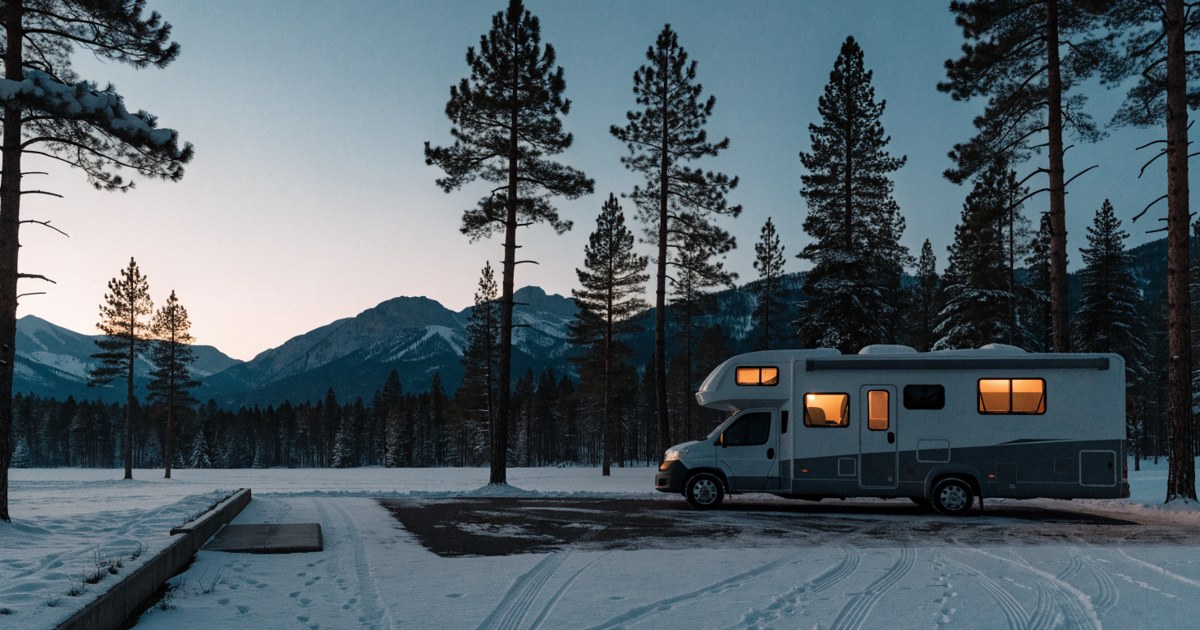
Most winter RV advice falls into two camps: winterize the rig and park it, or point it south and chase 70-degree afternoons. We have covered both — our RV Winter Prep Checklist handles storage and snowbird prep, and our Snowbird RV Guide covers the warm-weather escapes.
This guide is for the third group: RVers who want to camp in the cold. Ski weekends. Snowy national parks with no crowds. Holiday visits to family up north. Or just a quiet campground with a fresh layer of snow on the pines.
Cold-weather RV camping is absolutely doable — even in a rig that is not marketed as "four-season." It just takes a different playbook. Here is what actually matters.
Know What Your Rig Can Handle
Before you plan anything, be honest about your RV's cold-weather limits.
"Four-season" or "arctic package" rigs typically add heated and enclosed underbellies, extra insulation, dual-pane windows, and tank heaters. They can handle sustained freezing temperatures with sensible precautions.
Standard rigs can still camp in the cold, but you will need to do more of the work yourself — and you should be more conservative about how cold, and for how long.
A useful rule of thumb many RVers follow:
- Overnight lows in the 30s, days above freezing: Most rigs are fine with basic precautions (disconnect the hose at night or use a heated one, keep the furnace on).
- Several days below freezing: You need a real plan for water lines, tanks, and the underbelly.
- Single digits or below zero: This is four-season-rig territory, or a "dry camp with water stored inside" approach.
Check your owner's manual for the manufacturer's stated temperature rating, and know where your water lines, pump, and tank valves are located. Exposed lines and outside valves are where freeze-ups start.
Keep Your Water From Freezing
Frozen water is the number-one cold-weather RV problem. It can split hoses, crack fittings, and leave you without water (or a working toilet) when you need it most.
Your fresh water hose
A standard garden hose connected to a campground spigot will freeze surprisingly fast in sub-freezing temps. You have three good options:
- Use a heated water hose. These have a built-in heating element and plug into a standard outlet. Pair it with insulation wrapped around the spigot and the connection points — those are often the first parts to freeze.
- Fill your fresh tank and disconnect. Run off your onboard tank and water pump, refilling as needed. This is the simplest approach when temperatures are just dipping below freezing overnight.
- Disconnect at night only. If daytime temps are above freezing, many RVers stay hooked up during the day and run off the tank overnight.
Your tanks and underbelly
- Tank heaters: Many rigs have (or can add) electric heating pads on the fresh, gray, and black tanks. They run on 12V or shore power — know which, because it affects your power budget.
- Keep the furnace running. In many rigs, furnace ducting runs through the enclosed underbelly to keep tanks and lines above freezing. A space heater inside keeps you warm, but it does not heat the basement. Running only electric heaters is a common way to freeze lines in a rig designed around furnace heat.
- Skirting: RV skirting (vinyl, insulated panels, or even rigid foam board) blocks wind under the rig and dramatically helps in extended cold stays.
- Holding tank antifreeze: Adding a small amount of RV antifreeze (the pink, non-toxic kind) to your gray and black tanks after dumping can help prevent the contents and valves from freezing.
Your sewer hose
Do not leave your gray valve open and your sewer hose connected in freezing weather. Water sitting in the hose will freeze into a solid plug. Instead, keep the valves closed, let the tanks fill, and dump when they are mostly full — the volume helps flush the hose. Then disconnect and drain it.
Heat: Propane, Power, and Safety
Plan your propane
Your furnace is your main heat source, and it is thirsty. A typical RV furnace in the 30,000 BTU range running nonstop can burn roughly a third of a gallon of propane an hour. In real life it cycles on and off, but in very cold weather it may run more than you expect.
For context, a standard 20-lb propane cylinder holds a bit under 5 gallons. Two of them can disappear in a few cold days.
- Start every cold trip with full tanks.
- Know where to refill. Propane fill stations can be sparse in rural and mountain areas, and some have limited winter hours.
- Consider an extended-stay adapter or larger tank if you will be parked a while.
Supplement with electric heat (carefully)
If you have shore power, a small electric space heater or your rig's heat pump can take load off the furnace and save propane. Keep these in mind:
- Heat pumps lose efficiency as temps drop and many struggle to do much below roughly freezing.
- Watch your amperage. On a 30-amp hookup, a space heater, microwave, and electric water heater running at once can trip the breaker.
- Use space heaters with tip-over and overheat protection, keep them clear of bedding and curtains, and never run them on an undersized extension cord.
Safety gear you should not skip
- Test your carbon monoxide detector and propane leak detector before every winter trip.
- Never use a stove or oven as a heat source.
- Keep generator exhaust clear of snow and pointed away from the rig — snow buildup can direct exhaust where you do not want it.
- Keep furnace exhaust vents clear of snow and ice.
Battery Power in the Cold
Cold weather is hard on batteries, especially if you are dry camping.
- Lead-acid batteries lose usable capacity in the cold and can be damaged if allowed to freeze when discharged.
- Lithium (LiFePO4) batteries generally should not be charged below freezing unless they have built-in heating or low-temperature charge protection. Check your battery specs before relying on solar or alternator charging in sub-freezing temps.
- Furnace blowers draw real 12V power. A cold night of furnace cycling can drain a small battery bank faster than you expect. If you are boondocking, plan generator or charging time accordingly.
Beat Condensation (Before It Becomes Mold)
When it is cold outside and you are breathing, cooking, and showering inside a small, warm space, moisture builds fast. You will see it on windows first — and if you ignore it, it ends up in cabinets, mattresses, and walls.
- Crack a roof vent slightly to let moist air escape, even when it is cold.
- Run the vent fan while cooking and showering.
- Use a small dehumidifier if you have shore power, or moisture-absorbing products if you do not.
- Wipe down windows in the morning.
- Keep bedding and cushions slightly away from exterior walls to allow air circulation.
Reflective window insulation and thermal curtains also help, both with heat retention and with reducing cold surfaces where condensation forms.
Slide-Outs, Snow, and the Roof
- Clear snow off slide-out toppers before retracting. Bringing in a slide with snow and ice on top can damage seals and mechanisms.
- Watch roof snow loads. Most RV roofs are not designed for heavy, sustained snow loads. Brush off accumulation with a soft roof brush — never scrape or walk on a snow-covered roof.
- Check seals and caulking before the trip. A small gap becomes a big leak when ice melts.
- Bring a small shovel and de-icer for steps, stabilizer jacks, and the area around your door.
Driving in Winter Conditions
Getting to your winter campsite safely is half the battle.
Before you leave
- Check tire pressure cold — and often. Tire pressure drops roughly 1 PSI for every 10°F drop in temperature. A rig set up in a warm garage can be noticeably underinflated on a frozen morning.
- Diesel owners: Fill up with winter-blend fuel and consider an anti-gel additive if you are heading somewhere very cold.
- Know the chain and traction laws on your route. Several mountain states enforce chain controls or traction laws on certain highways during storms. Requirements vary by state and vehicle class, so check your state DOT before you go.
On the road
- Build in weather buffer days. The single best winter driving decision is not driving into a storm. Flexible itineraries beat rigid schedules.
- Avoid high mountain passes in active storms when lower-elevation alternatives exist.
- Drive in daylight whenever possible. Black ice is harder to spot at night, and many rural campgrounds are harder to find in the dark.
- Leave extra following distance. A loaded motorhome takes much longer to stop on slick pavement.
Finding Campgrounds That Are Actually Open
Here is the winter trip-planning trap most people fall into: a huge number of campgrounds close for the season, and many that stay open shut off water, close loops, or switch to first-come, first-served.
What to look for:
- Year-round private RV parks near ski areas and cities, which often keep full hookups available with freeze-protected spigots.
- Winter-open national park campgrounds. A handful of national park campgrounds stay open year-round, often with limited loops and seasonal water shutoffs. Examples that typically keep at least some sites open in winter include Mammoth Campground in Yellowstone, Mather Campground at the Grand Canyon South Rim, Watchman Campground in Zion, and part of North Campground at Bryce Canyon. Always confirm current status, services, and reservation rules on NPS.gov before you go — winter operations change from year to year.
- State parks with winter loops. Many state park systems keep select campgrounds open with electric-only sites.
- Rig-fit matters even more in winter. A tight, unplowed campground road is a very different challenge than the same road in July. Prioritize sites with easy access, pull-throughs, and plowed roads if you drive a larger rig.
The best winter campground is not just "open." It is open, bookable for your dates, fits your rig, has the hookups you need, and is reachable on roads that make sense in winter.
Your Cold-Weather RV Camping Packing List
Water and plumbing
- Heated water hose and spigot insulation
- RV antifreeze (non-toxic, for tanks)
- Foam pipe insulation and heat tape for exposed lines
- Skirting materials for extended stays
Heat and power
- Full propane tanks (plus a refill plan)
- Space heater with tip-over/overheat protection
- Heavy-duty, properly rated extension cord
- Battery monitor
Safety
- Tested CO and propane leak detectors
- Fire extinguisher
- Tire pressure gauge
- Chains or traction devices, if required on your route
- Emergency kit: blankets, flashlight, food, water, first-aid
Comfort
- Reflective window insulation or thermal curtains
- Dehumidifier or moisture absorbers
- Door draft stopper and rugs for cold floors
- Soft roof brush, small shovel, ice melt
How VistaBound Makes Winter RV Trips Easier
Cold-weather trips have more variables than summer ones: which campgrounds are actually open, which roads make sense in winter, what the weather is doing, and whether your rig fits where you are going. VistaBound is built to juggle those variables for you.
- AI Trip Co-Pilot: Tell it where you want to go and it plans the whole trip, day by day. Then refine it in plain language — "only campgrounds with full hookups," "keep driving days under four hours," or "add a buffer day before the mountain pass."
- Live campsite availability: Plan around campgrounds that can actually be booked for your dates, not a map full of seasonal closures.
- Rig-fit campground matching: Match Score helps you find sites that fit your length and setup — important when winter access is tighter.
- RV-safe routing: Routes that account for your rig's height, weight, and length, plus propane and tunnel restrictions.
- Weather layers: See the forecast along your route so you can shift a travel day before a storm, not after.
- Offline maps and navigation + CarPlay/Android Auto: Keep your route and plan available when cell coverage drops in the mountains.
Start planning on the free plan — no credit card required. Or lock in our Founder's Rate: $41/year with code FOUNDER30, locked in for life.
Plan your winter RV trip with VistaBound →
Cold-Weather RV Camping FAQ
Can you live in a regular RV in freezing weather?
Yes, with preparation. Short stays near or slightly below freezing are manageable in most rigs if you protect your water hose, keep the furnace running to heat the underbelly, and manage condensation. Extended stays in very cold temperatures are much easier in a four-season rig, or with skirting, tank heaters, and heat tape.
At what temperature do RV pipes freeze?
Water freezes at 32°F, but RV lines usually do not freeze the instant temperatures dip that low. Exposed lines and hoses can freeze within hours during a hard freeze, especially with wind. Many RVers start protecting lines whenever overnight lows are forecast in the 20s or below.
Should I keep my RV furnace on all night in winter?
In most cases, yes. Beyond keeping you warm, many rigs route furnace heat through the underbelly to protect tanks and lines. Set it to a moderate temperature rather than turning it off.
How long does a 20-lb propane tank last in winter?
It depends on your furnace size, insulation, and temperatures, but in very cold weather a single 20-lb tank may only last a day or two of heavy furnace use. Plan on more propane than you think you need.
Do campgrounds stay open in winter?
Some do. Many public campgrounds close or reduce services seasonally, while many private RV parks and select national and state park campgrounds stay open year-round. Always confirm current winter operations and water availability before you go.
Is it safe to drive an RV in snow?
It can be, with the right preparation, tires, traction devices where required, and a flexible schedule. The safest approach is avoiding active storms and high passes during bad weather, and planning buffer days so you never feel forced to drive.
Winter RV camping rewards a bit of extra preparation with quiet campgrounds, empty trails, and snowy views most RVers never see. Prep the rig, plan around what is actually open, and leave room in the schedule for the weather. Start planning your cold-weather trip on VistaBound — free, no card required.